
Pastor's Reflection 2026-04-23
Lessons from a Raised Bed Garden
"The earth produces of itself, first the blade, then the ear, then the full grain in the ear. But when the grain is ripe, at once he puts in the sickle, because the harvest has come."
— Mark 4:28–29
— Mark 4:28–29
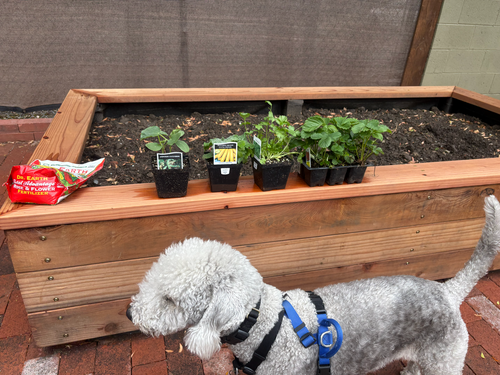
Around mid-April, Kaleo Johnson, one of the scouts from Wesley's Troop 201, completed his Eagle Scout project. It was a beautifully constructed raised garden bed in the backyard of the Mineta House. Kaleo built it with careful planning, with a great deal of hard work, and lots of help from his fellow scouts and from a few dedicated parents. On behalf of all of us at Wesley, thank you, Kaleo and your team of helpers – which includes DeeDee Azuma who coordinated all of the scheduling.
And this week, I am going to plant some vegetables in it to transform the empty planter bed into a (hopefully) lush garden. Planting is not simply dropping a seed into the ground and hoping for the best. It is a process and as I laid out the tools to plant the garden in the raised bed, I realized that gardening is a process much like our the ministries here at Wesley!
Let me explain, planting a garden begins with choosing the right spot for the right plant. Not every vegetable thrives under the same conditions. One of the veggies I'll be planting this year is a Japanese cucumber. They need full sun and something to climb as they grow. The strawberries I will also be planting, thrive when there is good drainage and room to send out their runners. You cannot simply put any plant anywhere and expect it to do well. You have to know the plant. You have to observe the light, consider the space and think about what each variety truly needs to flourish. There is deep spiritual wisdom in this process. How often do we place people, or ourselves, into roles, into expectations, into boxes, without ever stopping to ask what conditions they/we actually need to thrive? When it comes to the ministries at Wesley, my hope is that everyone will get involved in one or several of the ministries but only where you believe you will grow!
Then comes preparing the soil. This is my favorite part. Before a single plant goes in, you need to work the dirt, loosening it, mixing in compost, making sure it is neither too compact nor too loose, that it holds moisture without drowning roots. You are essentially creating a welcome for the plants. You are saying to whatever you are about to plant: "Hey, this ground has been made ready for you!" Wesley Church, at its best, does exactly that. Before new people arrive, before new ideas take root, before transformation can happen, someone has been quietly preparing the space, getting things ready to welcome new people, new ideas so the church can continue to transform!
And then there is the ongoing work of tending the garden. Planting is really just the beginning. A garden does not grow on good intentions alone. It asks you to return, day after day, to water, to watch, to notice what is flourishing and what might need a little extra care. Some plants surprise you with how vigorously they take off. Others need more coaxing, more patience, more time in the right conditions before they find their footing. The gardener's job is not to force the harvest but to stay present to the process and to trust that growth is happening even when you cannot yet see it above the soil. This is, I think, one of the most spiritually rich lessons a garden can teach us. We live in a world that rewards speed and visible results. But the garden insists on its own timeline, and it asks us to slow down, pay attention, and trust the steady, quiet work that God is doing even when we cannot see it.
All of this, I think, is what the Wesley Church community looks like. We are, each of us, gardeners. We tend one another. We prepare the ground for those who have not yet arrived. We pay attention to what each person needs to truly grow. And we consistently show up for each other with love and caring.
Kaleo built a raised bed at the Mineta House, on ground where the Mineta family had once called their home. The land had already known good people doing good work, and now there is something new being planted to transform the yard. You are welcome to come by and see it sometime. Better yet, come by and help.
With dirt on my hands and love in my heart,
And this week, I am going to plant some vegetables in it to transform the empty planter bed into a (hopefully) lush garden. Planting is not simply dropping a seed into the ground and hoping for the best. It is a process and as I laid out the tools to plant the garden in the raised bed, I realized that gardening is a process much like our the ministries here at Wesley!
Let me explain, planting a garden begins with choosing the right spot for the right plant. Not every vegetable thrives under the same conditions. One of the veggies I'll be planting this year is a Japanese cucumber. They need full sun and something to climb as they grow. The strawberries I will also be planting, thrive when there is good drainage and room to send out their runners. You cannot simply put any plant anywhere and expect it to do well. You have to know the plant. You have to observe the light, consider the space and think about what each variety truly needs to flourish. There is deep spiritual wisdom in this process. How often do we place people, or ourselves, into roles, into expectations, into boxes, without ever stopping to ask what conditions they/we actually need to thrive? When it comes to the ministries at Wesley, my hope is that everyone will get involved in one or several of the ministries but only where you believe you will grow!
Then comes preparing the soil. This is my favorite part. Before a single plant goes in, you need to work the dirt, loosening it, mixing in compost, making sure it is neither too compact nor too loose, that it holds moisture without drowning roots. You are essentially creating a welcome for the plants. You are saying to whatever you are about to plant: "Hey, this ground has been made ready for you!" Wesley Church, at its best, does exactly that. Before new people arrive, before new ideas take root, before transformation can happen, someone has been quietly preparing the space, getting things ready to welcome new people, new ideas so the church can continue to transform!
And then there is the ongoing work of tending the garden. Planting is really just the beginning. A garden does not grow on good intentions alone. It asks you to return, day after day, to water, to watch, to notice what is flourishing and what might need a little extra care. Some plants surprise you with how vigorously they take off. Others need more coaxing, more patience, more time in the right conditions before they find their footing. The gardener's job is not to force the harvest but to stay present to the process and to trust that growth is happening even when you cannot yet see it above the soil. This is, I think, one of the most spiritually rich lessons a garden can teach us. We live in a world that rewards speed and visible results. But the garden insists on its own timeline, and it asks us to slow down, pay attention, and trust the steady, quiet work that God is doing even when we cannot see it.
All of this, I think, is what the Wesley Church community looks like. We are, each of us, gardeners. We tend one another. We prepare the ground for those who have not yet arrived. We pay attention to what each person needs to truly grow. And we consistently show up for each other with love and caring.
Kaleo built a raised bed at the Mineta House, on ground where the Mineta family had once called their home. The land had already known good people doing good work, and now there is something new being planted to transform the yard. You are welcome to come by and see it sometime. Better yet, come by and help.
With dirt on my hands and love in my heart,
Posted in Newsletter 2026-04-23