
A New Face at Wesley, A Historic Legacy: Meet Marjorie Peckham
When most of the 120,000 Japanese Americans who were incarcerated during WWII, returned to the West Coast, many found their homes, farms, and businesses vandalized, rented out, or seized by opportunists posing as friends. When my own mother’s family, the Seike’s, returned to their property in Seattle, they discovered their property had been horribly damaged, and all of their household possessions were stolen.
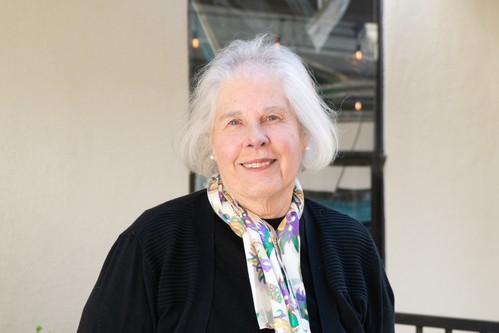
In San José’s Japantown, some families experienced a different outcome because of one man, Mr. J.B. Peckham, a local lawyer who had built a reputation as an ally to Asian communities. J.B. Peckham is the grandfather of Marjorie Peckham’s late husband. Marjorie (see picture) began attending Wesley in 2024, transferring her membership to Wesley from Fremont UMC.
Before WWII, the Issei were barred from land ownership because of California's 1913 Alien Land Law which prohibited non-U.S. citizens from owning land. And during that time all immigrants were ineligible from becoming U.S. citizenship. Thus, this law essentially barred Japanese immigrants (and other Asians) from purchasing property. The Alien Land Law was fueled by anti-Asian sentiment and economic fears in California. It was during this time that Mr. Peckham would purchase property on behalf of Asian families in his own name, and then quietly accept mortgage payments from them. He would then later transfer the title to one of the children, who was an American citizen, when they turned 21. During WWII when Japanese American families were illegally and forcibly removed from their home and businesses, he continued protecting these assets. He maintained these properties, kept watch over them and even negotiating subleases when needed.
He protected the property of at least 200 Japanese Americans, including the Mineta family home, which now the Wesley parsonage, while they were illegally incarcerated at the Topaz Internment Camp in Utah. Norman Mineta once wrote in one tribute that Mr. Peckham was “our patron saint,” because he helped the Japanese American community, but it came at a cost. J.B. Peckham became the target of a lot of hatred amongst his peers. Many believe Peckham’s courageous actions helped preserve San José’s Japantown itself. Norman Mineta said, “without Mr. Peckham there would be no Japantown.”
And it’s worth saying out loud, that today, we seem to see less of the kind of generosity Mr. Peckham embodied, especially when that generosity costs you something. Mr. Peckham truly lived out Jesus’ command to “love your neighbors,” even when it was dangerous, unpopular, and personally risky.
In San José’s Japantown, some families experienced a different outcome because of one man, Mr. J.B. Peckham, a local lawyer who had built a reputation as an ally to Asian communities. J.B. Peckham is the grandfather of Marjorie Peckham’s late husband. Marjorie (see picture) began attending Wesley in 2024, transferring her membership to Wesley from Fremont UMC.
Before WWII, the Issei were barred from land ownership because of California's 1913 Alien Land Law which prohibited non-U.S. citizens from owning land. And during that time all immigrants were ineligible from becoming U.S. citizenship. Thus, this law essentially barred Japanese immigrants (and other Asians) from purchasing property. The Alien Land Law was fueled by anti-Asian sentiment and economic fears in California. It was during this time that Mr. Peckham would purchase property on behalf of Asian families in his own name, and then quietly accept mortgage payments from them. He would then later transfer the title to one of the children, who was an American citizen, when they turned 21. During WWII when Japanese American families were illegally and forcibly removed from their home and businesses, he continued protecting these assets. He maintained these properties, kept watch over them and even negotiating subleases when needed.
He protected the property of at least 200 Japanese Americans, including the Mineta family home, which now the Wesley parsonage, while they were illegally incarcerated at the Topaz Internment Camp in Utah. Norman Mineta once wrote in one tribute that Mr. Peckham was “our patron saint,” because he helped the Japanese American community, but it came at a cost. J.B. Peckham became the target of a lot of hatred amongst his peers. Many believe Peckham’s courageous actions helped preserve San José’s Japantown itself. Norman Mineta said, “without Mr. Peckham there would be no Japantown.”
And it’s worth saying out loud, that today, we seem to see less of the kind of generosity Mr. Peckham embodied, especially when that generosity costs you something. Mr. Peckham truly lived out Jesus’ command to “love your neighbors,” even when it was dangerous, unpopular, and personally risky.
Posted in Newsletter 2025-12-18